
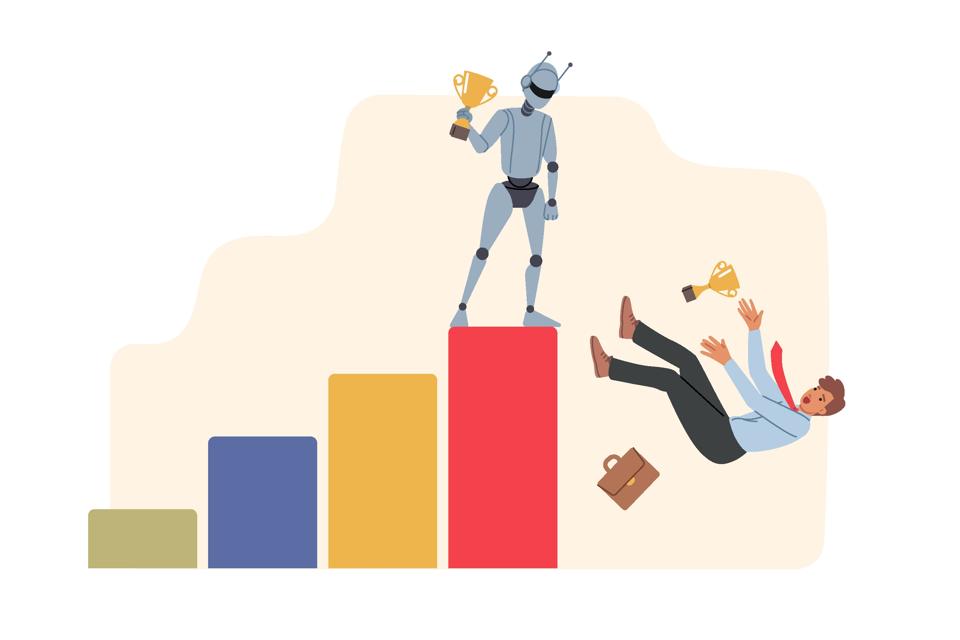
Investors from Silicon Valley are raising alarms over the potential for Artificial Intelligence (AI) to replace up to 80% of current jobs in the coming years. With the rapid advancement of machine learning, natural language processing, and automation technologies, many industries face significant workforce disruptions.
Experts predict that routine and repetitive tasks in sectors such as manufacturing, data entry, customer service, and logistics are particularly vulnerable. AI systems can now perform these tasks more efficiently, accurately, and at a lower cost than human labor. This trend is expected to reshape the employment landscape across the globe, forcing businesses to rethink workforce strategies and upskill employees.
Sectors Most Affected by AI
While some jobs may be fully automated, others will be partially transformed. For example, roles in finance, healthcare, legal, and creative industries will increasingly rely on AI-assisted decision-making and content generation. Tasks such as financial analysis, medical diagnostics, legal research, and copywriting can be augmented with AI tools, improving efficiency but potentially reducing the number of human positions required.
Manufacturing remains one of the most exposed sectors, with AI-driven robotics and predictive maintenance systems replacing assembly line work. Similarly, customer service roles are shifting toward AI-powered chatbots and virtual assistants, which can handle inquiries 24/7 without fatigue. Even white-collar professions are being disrupted as AI platforms can draft reports, analyze data, and automate scheduling with high precision.
Implications for the Global Workforce
The prediction that AI could replace 80% of jobs has significant implications for global employment, education, and economic planning. Governments and https://malaka555.sg-host.com/ may need to invest heavily in reskilling programs and lifelong learning initiatives to prepare workers for AI-integrated workplaces.
Some experts argue that while many positions will disappear, new roles will emerge in AI development, programming, ethics, and human-AI collaboration. The challenge lies in ensuring a smooth transition for workers whose jobs are automated, while simultaneously promoting innovation and productivity growth. Policies on income support, retraining incentives, and job creation in emerging sectors will be critical to mitigate potential economic disruptions.
Preparing for an AI-Driven Economy
To navigate this shift, organizations are advised to adopt a strategic approach to workforce planning. This includes identifying roles at high risk of automation, investing in employee training, and exploring AI-human collaboration opportunities. Companies that embrace AI while upskilling their workforce are more likely to thrive in the evolving market.
Investors also highlight the importance of ethical AI implementation, focusing on fairness, transparency, and accountability. By integrating AI responsibly, businesses can maintain trust while leveraging the efficiency and scalability benefits AI provides.
The discussion around AI replacing jobs underscores a broader societal question: how to balance innovation with social and economic stability. Preparing for an AI-driven future will require cooperation between governments, corporations, and educational institutions to ensure that technological progress translates into inclusive growth rather than widespread displacement.
0 Comments